



Take A Online Appointment!
From Sale Deeds to Rent Agreements, we provide expert drafting, review, and registration of all property-related legal documents.
Property transactions involve a variety of legal documents that must be drafted, executed, and registered correctly to ensure lawful ownership, transfer, and tenancy. We provide end-to-end solutions for all your property documentation needs.
Transfer of property ownership from seller to buyer.
Legal contract between landlord and tenant.
Voluntary transfer of property as a gift.
Legal validation of property documents.
Division of property among co-owners.
Authorise someone to act on your behalf.
Release of property rights by a co-owner.
Will, lease, mortgage, and more.
Property documents establish legal ownership, define rights and obligations, and serve as evidence in disputes. A single error in drafting or registration can lead to years of litigation. At Kwatra Legal, we ensure your property documents are accurate, compliant, and legally enforceable.
A Sale Deed is the primary legal document that transfers ownership of property from the seller to the buyer. It is the most important document in any property transaction and must be registered with the sub-registrar to be legally valid.
A Sale Deed (also known as a conveyance deed) is a legal document that formally transfers the ownership of a property from the seller (transferor) to the buyer (transferee). It contains all the terms and conditions of the sale, including the property description, sale consideration, payment terms, and possession date.
Under the Registration Act, 1908, a Sale Deed must be registered with the Sub-Registrar of Assurances within 4 months of execution. Registration is mandatory for any transfer of immovable property exceeding ₹100 in value.
Key Clauses of a Sale Deed:
Essential Checklist:
A Rent Agreement (or Lease Agreement) is a legal contract between a landlord and a tenant that outlines the terms and conditions of renting a property. It protects the rights of both parties and ensures a smooth tenancy.
A Rent Agreement is a legally binding document that establishes the terms of a rental arrangement between a landlord (lessor) and a tenant (lessee). It covers aspects such as rent amount, security deposit, duration of tenancy, maintenance responsibilities, and termination conditions.
In India, rent agreements are governed by the Transfer of Property Act, 1882 and state-specific rent control laws. For agreements exceeding 12 months, registration is mandatory under the Registration Act, 1908.
Key Clauses of a Rent Agreement:
Best Practices:
A Gift Deed is a legal document that facilitates the voluntary transfer of immovable property from one person to another without any monetary consideration. It is a common way to transfer property to family members or loved ones.
A Gift Deed is a legal instrument that transfers the ownership of immovable property from a donor to a donee as a gift, without any exchange of money or other consideration. It is governed by the Transfer of Property Act, 1882 and must be registered to be legally valid.
A gift can be made to a spouse, children, parents, relatives, or even a charitable organisation. The transfer must be voluntary and made with the free consent of the donor. Registration is mandatory for gifts of immovable property.
Key Clauses of a Gift Deed:
Tax Implications:
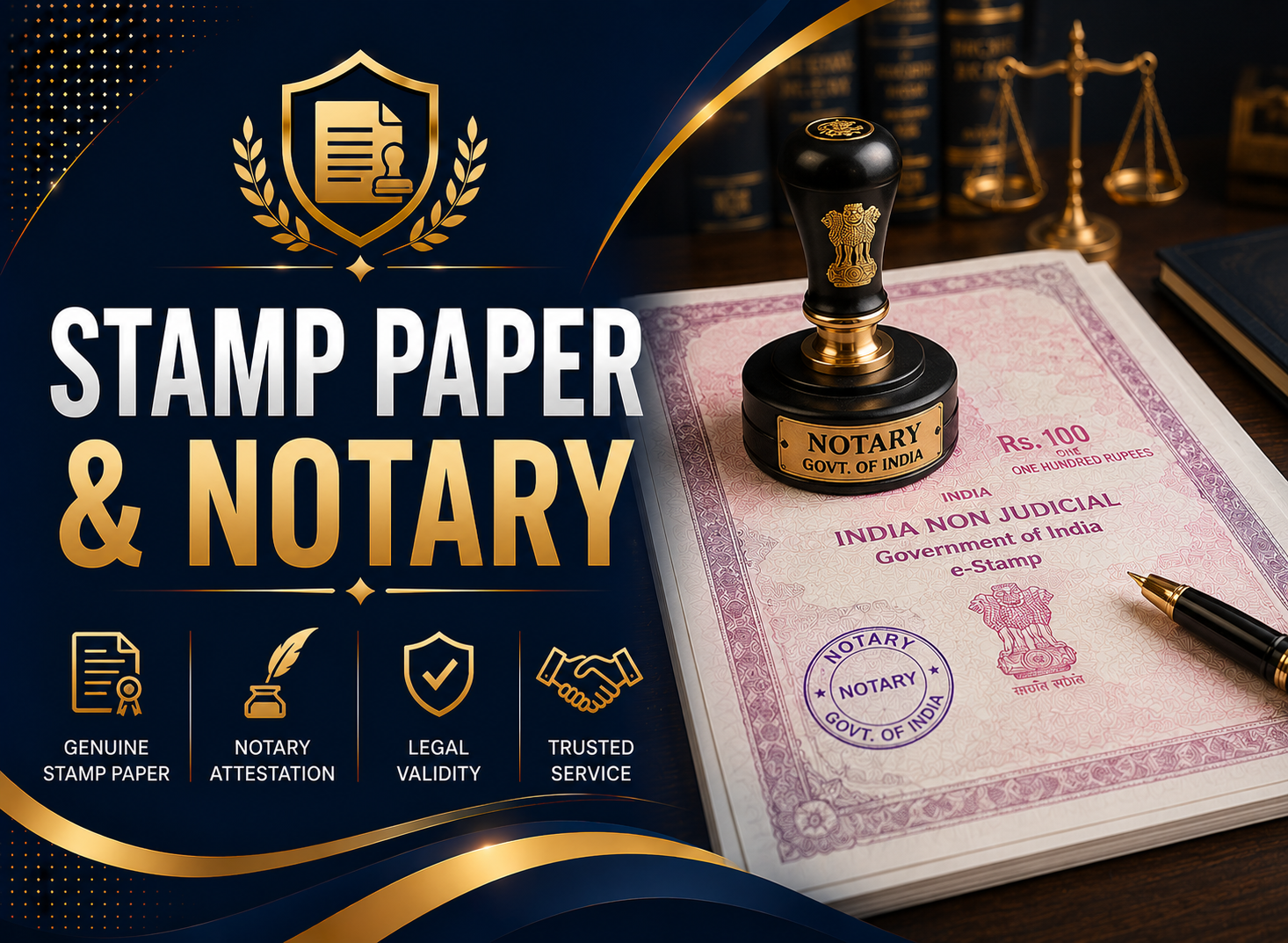
Stamp paper and notarisation are essential components of legal documentation in India. They provide legal validity, authenticity, and enforceability to property and commercial documents.
Stamp paper is a special type of paper on which legal documents are printed to make them legally valid. It serves as proof that the required stamp duty has been paid to the government. Under the Indian Stamp Act, 1899, every document that creates, transfers, or extinguishes a right or liability must be executed on stamp paper of the appropriate value.
Stamp duty rates vary from state to state and depend on the type of document and the property value. The stamp paper must be purchased in the name of one of the parties to the document.
Notarisation is the process of authentication of a document by a Notary Public, who is a legal officer authorised to certify documents, administer oaths, and verify signatures. Notarisation ensures that the document is genuine and that the parties have executed it voluntarily.
In India, Notaries are appointed under the Notaries Act, 1952. Notarisation involves the notary verifying the identity of the signatories, witnessing their signatures, and affixing their official seal and stamp on the document.
When is Notarisation Required?
A Partition Deed is a legal document used to divide a property among co-owners or family members who hold joint ownership. It formalises the division of shares and establishes separate ownership of specific portions.
A Partition Deed is a legal instrument that divides a property held in joint ownership into separate, individual shares. It is commonly used in families to divide ancestral property among heirs or among co-owners who wish to hold their respective portions independently.
The Partition Deed must be registered under the Registration Act, 1908 if it involves immovable property. It requires the consent of all co-owners and must clearly specify the division of the property into distinct parts.
Key Clauses of a Partition Deed:
Process:
A Power of Attorney (POA) is a legal document that authorises one person (the agent or attorney) to act on behalf of another person (the principal) in legal, financial, or property matters.
A Power of Attorney (POA) is a legal document that grants a person (the agent or attorney-in-fact) the authority to act on behalf of another person (the principal) in specified matters. It is commonly used for property transactions, legal proceedings, financial management, and business operations.
In India, POAs are governed by the Powers of Attorney Act, 1882. A POA can be either General (broad authority over multiple matters) or Specific (limited to a particular transaction or purpose). Registration of a POA is not mandatory but is recommended for property-related matters.
Types of Power of Attorney:
Key Clauses of a POA:
A Relinquishment Deed is a legal document by which a co-owner voluntarily gives up their share or interest in a property in favour of another co-owner. It is commonly used in family settlements and property divisions.
A Relinquishment Deed (also known as a Release Deed) is a legal document through which a co-owner of a property voluntarily surrenders their right, title, or interest in the property to another co-owner. The person giving up their share is called the relinquisher, and the person receiving the share is called the releasee.
This deed is commonly used in family settlements where one heir wishes to give up their share in ancestral property to another heir. It is also used when a co-owner wishes to exit joint ownership and transfer their share to the remaining co-owners. The deed must be registered to be legally valid.
Key Clauses of a Relinquishment Deed:
When to Use a Relinquishment Deed:
In addition to the primary property documents, there are several other legal instruments used in property transactions, such as Wills, Lease Deeds, Mortgage Deeds, and more.
A Will is a legal document that specifies how a person's property and assets should be distributed after their death. It ensures that the property passes to the intended beneficiaries and helps avoid family disputes. Wills are governed by the Indian Succession Act, 1925.
A Lease Deed is a contract that transfers the right to use a property for a specified period in exchange for rent. Unlike a rent agreement, a lease is typically for a longer duration (often 3+ years) and must be registered. It is governed by the Transfer of Property Act, 1882.
A Mortgage Deed is a legal document that creates a charge on a property to secure a loan. It gives the lender the right to take possession of the property if the borrower defaults on the loan. Mortgage deeds are governed by the Transfer of Property Act, 1882 and must be registered.
Understand the key differences, purposes, and registration requirements of each property document to choose the right one for your needs.
| Document | Purpose | Parties Involved | Registration Required? | Governing Law |
|---|---|---|---|---|
| Sale Deed | Transfer ownership from seller to buyer | Seller & Buyer | ✓ Mandatory | Registration Act, 1908 |
| Rent Agreement | Define terms of rental tenancy | Landlord & Tenant | If >12 months | Transfer of Property Act, 1882 |
| Gift Deed | Voluntary transfer without consideration | Donor & Donee | ✓ Mandatory | Transfer of Property Act, 1882 |
| Stamp Paper & Notary | Legal authentication and duty payment | Document parties | As applicable | Indian Stamp Act, 1899 |
| Partition Deed | Divide property among co-owners | Co-owners | ✓ Mandatory | Registration Act, 1908 |
| Power of Attorney | Authorise agent to act on your behalf | Principal & Agent | Recommended for property | Powers of Attorney Act, 1882 |
| Relinquishment Deed | Give up share in property | Relinquisher & Releasee | ✓ Mandatory | Registration Act, 1908 |
| Will | Distribution of property after death | Testator & Beneficiaries | Not mandatory | Indian Succession Act, 1925 |
From drafting to registration, we provide comprehensive property document services that ensure legal compliance, accuracy, and peace of mind.
Precisely drafted property documents with thorough review to ensure legal validity and protect your interests.
Guidance on stamp duty calculation, procurement of stamp paper, and registration of documents with the Sub-Registrar.
Comprehensive title verification, encumbrance checks, and risk assessment before any property transaction.
Expert guidance on family property settlements, partition, relinquishment, and dispute resolution.
Prompt drafting and review services, with quick responses to your queries and document needs.
Ensure all your property documents comply with applicable laws and regulations, minimising legal risks.
Find answers to the most common questions about property documents and our services.
Whether you need a Sale Deed, Rent Agreement, Gift Deed, Power of Attorney, or any other property document, Kwatra Legal provides expert drafting, review, and registration services to protect your property rights and ensure legal compliance.